Tired of Watching Weaker Firms Win Your Commissions?
Beautiful Work Is Not Enough.
The quality of your design work and the quality of the materials you use to present it are two completely different disciplines. You've spent years mastering the first. Almost nobody taught you the second - and that gap is why less qualified studios keep winning projects you were better suited for.
How to win better projects - without discounting your fee, chasing ghosts, or competing on price.

You Can Spot an Unbalanced Room in Half a Second. You've Never Been Taught to Spot This.
The missing skill isn't design. It's making that expertise visible before an interior design or architecture client makes their decision.
WHAT YOU ALREADY KNOW
- Balance, proportion, light, movement
- A portfolio built through years of practice
- A space that changes how a family lives
WHAT CLIENTS DON'T AUTOMATICALLY SEE
- Why your decisions matter
- A clear reason to choose you
- A story they can picture
The Project That Should Have Been Yours
Two studios. One residential renovation.
- Years of genuinely excellent design work
- No real online presence - invisible before a client even starts looking
- The one enquiry that slips through gets no follow-up
- Good, solid design work
- Easy to find wherever a client looks
- Every enquiry gets a fast, clear reply
THE MACHINE
Your building or interior is the product. The proposal, the first reply, and every touchpoint after it are the machine that carries it to a decision.
A brilliant product fed through a broken machine loses to a good product fed through a well-built one. That's not a talent gap. It's closeable.
This Is Exactly What the E-Book FixesYour Work Speaks a Language the Algorithm Doesn't Read.
You got into interior design to see a home before it exists - the way light will land on a kitchen
island, the way a family will move through a space that isn't built yet. That should be
enough.
It isn't anymore. Not because you got worse. Because clients now find you before they ever ask a
friend.
The Shift
- Referrals carried the practice
- A friend vouched for your work
- Skill was visible in person
- Referrals are slower
- A feed decides who gets seen
- Skill has to survive a scroll
The algorithm can't tell a masterfully resolved living room from a nice-looking rental flip. It only knows what gets seen. Two equally invisible designers can't be compared on talent - the client can only choose whoever made it easiest to say yes.
Some of This Will Sting. That's How You'll Know It's for You.
This isn't for everyone. It's for you if:
You've quoted a fee and heard nothing back, more than once.
You've watched a less experienced designer get chosen over you and felt something between confusion and quiet fury.
Your business was built on referrals, and the referrals have gotten quieter.
You've finished a project that changed how a family lives in their own home - and it got forty likes and a handful of saves.
You're proud of your taste and a little embarrassed by your website.
The Blueprint for Getting Hired, Not Just Admired.
Every chapter ends with a Do This Now action and a Collateral Checklist. This is a working manual, not a E-Book to admire once and shelve.
The Machine Behind the Work
The twelve touchpoints that carry a prospect from a scrolled-past reel to a signed contract - and why most studios only build a third of the machine that actually wins the job.
Selling the Vision Before It's Built
Your client can't see the finished space. They're buying a future they can't picture, from someone they barely know. The four levers that make that future feel real.
The Eight Collaterals
Every studio you quietly envy is running all eight types of collateral - Attention, Trust, Education, WOW, Problem-Solution, Innovation, Samples, and the Irresistible Offer. Most designers are strong on two and blank on the rest. Find out which.
The Four Pillars of Trust
Hiring a designer is an act of extraordinary trust - a client hands over their home, their money, and a year of their life to a vision they can't yet see. The A-B-C-D framework for earning that trust on purpose.
Packaging the Practice
The seven-part proposal architecture that turns a fee sheet into a decision document, and the campaign thinking that stops your pipeline from swinging between overwhelmed and empty.
Collateral as Relationship
The handwritten note. The referral loop. The post-handover rhythm most studios claim to run on and never actually build - where the most profitable marketing in your practice has been hiding the whole time.
The Story Behind the Space
Facts inform. Stories travel. The four-part structure for turning every project into the story a client repeats to their partner that same night - the reason they end up telling three friends before you ask them to.
Same Eye. Pointed at a New Problem.
A small studio pitching against a large practice doesn't need to look bigger - it needs to reframe size as the advantage: "You'll work directly with the person designing your home, not a rotating team." Same market, opposite framing. That single shift is often the difference between competing on fee and not competing on fee at all.
A client balks at one large number on a proposal. Nothing about repackaging the same work into three named phases - each with its own deliverable and decision point - changes the total. But the client now sees a sequence of sensible commitments instead of one frightening leap. The objection dissolves. No discount required.

The Empowered Voices
Ankit Lodha
JaipurMohit Mittal
New DelhiAnkur Hora
New DelhiEverything Inside, for Less Than the Cost of One Proposal.
Get Instant Access
This Isn't Theory. It's Twenty Years of Proof.
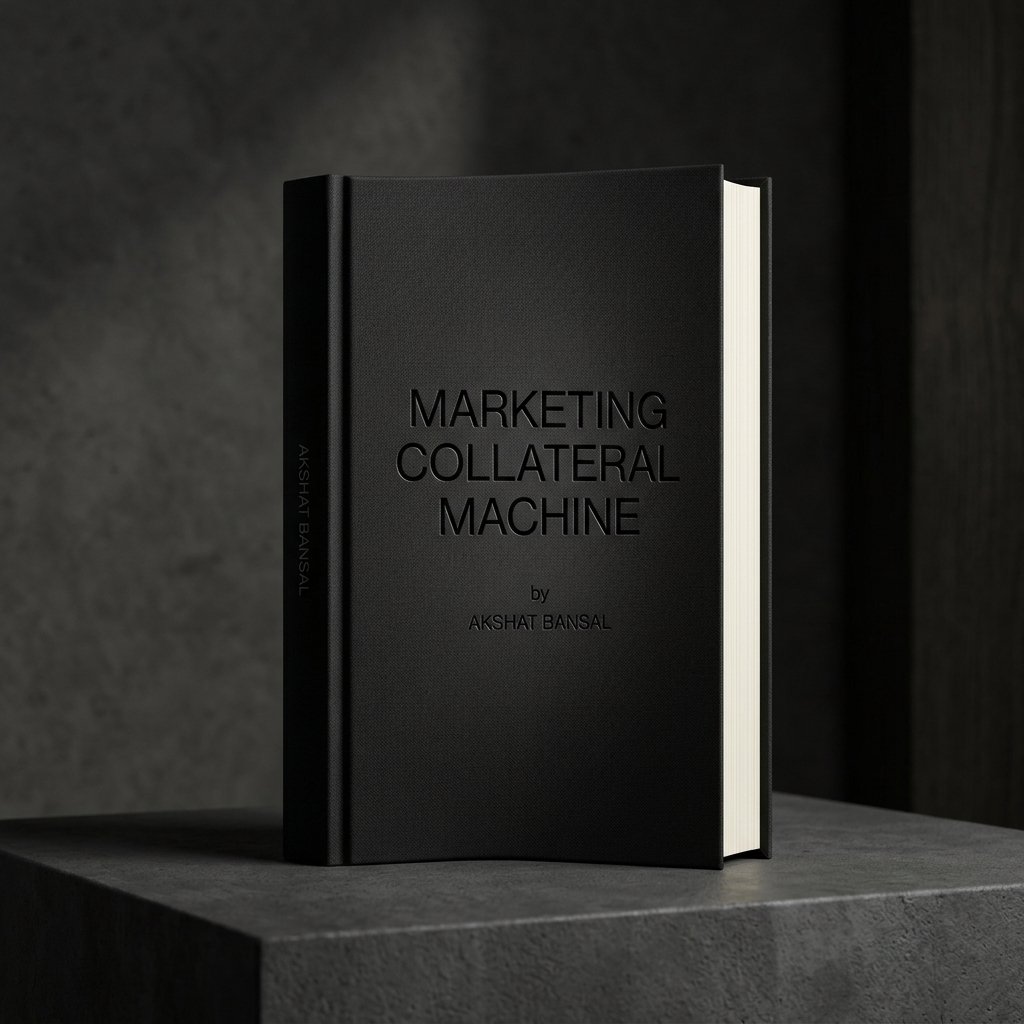
Akshat Bansal didn't learn this from a marketing course - he learned it building Benzoville into India's #1 luxury hardware brand, working directly with the exact audience this E-Book is written for.
"I already post consistently and it's not working."
Posting is one stage of three - Know, Like, Trust. Most designers only ever build the first, then wonder why the phone stays quiet. This E-Book is mostly about the two stages you're missing.
"I don't have time to become a marketer."
You're not being asked to. You're being asked to bring the same intention to your proposals that you already bring to a floor plan - build the system once, so it stops draining you every time you send a fee.
"This feels a little beneath the craft."
That instinct is exactly why this E-Book exists. A proposal is an information architecture problem. A portfolio is a curation problem. You already have the instincts - they've just never been pointed at this part of your practice.
"I'm early in my career. Is this still for me?"
Especially you. It's far easier to build the machine right from day one than to spend ten years undoing an inconsistent one.
"Is this only for residential designers?"
No. The frameworks flex across residential, hospitality, and commercial work, with worked examples for each - the psychology of getting chosen doesn't change with the project type.
Stop Letting Great Work Lose Quietly.
You already do the hard part. You take dark, awkward, disappointing spaces and turn them into places people love to live in. The tragedy is how often that talent stays invisible - buried under a flat proposal, a portfolio that impresses peers but doesn't move clients, a great first meeting that dies in silence because nothing carried it forward.
Your prospects can't see inside your head. They can't see the years of training behind every decision you make in a room. They can only see what you put in front of them.
This isn't a framework built in a seminar room. It's twenty years of selling directly into the world you work in, already handed to over a thousand business owners who needed exactly this.